Rise from depression Review

Rise from depression Review: Bad advice spreads because it tastes good for about five seconds.
That’s really it. It’s quick, smug, punchy, easy to repeat. “Just think positive.” “Go outside.” “You need discipline.” “Stop being lazy.” A stranger in the USA says it on TikTok, another person puts it on Facebook with a dramatic sunset, and then somehow that nonsense gets passed around like it’s family gold. It isn’t. It’s junk. Cheap junk too.
And depression, whether people like hearing this or not, does not care about catchy lines. It does not leave because somebody made a reel with piano music and said “choose happiness” in white text over a mountain. I mean, come on. That’s not treatment. That’s wallpaper.
So if you are searching for a Rise from depression Review, you are probably not looking for fluff. You want the actual thing. The messy thing. The part where somebody says, alright, here are the worst lies people keep repeating, here is why they are nonsense, and here is what might actually help instead. That’s what this is.
Based on the sales page content, Rise From Depression is a self-guided online course created by Nathan Peterson, a licensed clinical social worker. It promises 13 video lessons, 8 worksheets, bonus journal prompts, and lifetime access. It also says, pretty clearly, that it is not meant to replace proper licensed care for severe depression or crisis situations. That line matters more than the shiny parts. Honestly maybe the most.
Because in the USA right now, people are tired. Financially tired. Mentally tired. Digitally fried. Everybody wants answers, but the internet keeps handing them slogans instead of tools. That’s why a proper Rise from depression Review should not sound like a salesman on too much coffee. It should sound like somebody who can separate hype from reality.
Let’s do that.
| Feature | Details |
|---|---|
| Product Name | Rise From Depression |
| Type | Self-guided online depression course |
| Creator | Nathan Peterson, LCSW |
| Main Method | CBT, behavioral activation, mindfulness, self-compassion |
| Course Format | 13 video lessons + 8 worksheets + bonus journal ideas |
| Access | Lifetime access |
| Price | $147 one-time payment |
| Retailer Mentioned | ClickBank listed on the sales page |
| Best For | Adults who want structured self-help tools |
| Not For | People in crisis needing immediate in-person support |
| Main Claims in Reviews | “Highly recommended”, “Reliable”, “No scam”, “100% legit” |
| USA Relevance | Appeals to USA buyers looking for flexible, lower-cost guided help |
| Risk Factor | Unrealistic expectations, self-guided effort, not a replacement for therapy |
1. Worst Advice Ever: “Just Think Positive and It Will Go Away”
Oh yes, the classic.
The spiritual cousin of “have you tried not being sad?”
This advice has survived for years because it sounds clean and confident. It also lets the person giving the advice feel wise without having to do any real thinking. Very convenient. Very lazy. Like throwing a napkin at a flood and calling yourself emergency response.
The real issue is this: depression is not just a pile of gloomy thoughts floating around like dust. It can affect energy, motivation, concentration, sleep, self-worth, appetite, behavior, daily routine. Everything starts bending a little, then a lot. So telling someone to “just think positive” is not only thin, it’s insulting in a soft, polite way. The worst kind.
A lot of people struggling already know their thoughts are dark or distorted. They know. They’re not blind. The problem is that awareness and control are not the same thing. Knowing your house is on fire doesn’t put the flames out.
That is one reason this Rise from depression Review needs to be blunt. People in the USA hear this fluffy garbage constantly. In comments. In podcasts. In living rooms. In offices where someone says “mindset is everything” while eating cold salad from a plastic bowl and pretending they’ve solved human pain. They haven’t.
What makes more sense is learning how to identify those thought patterns and challenge them in a more structured way. That is part of what the sales page says this course teaches through CBT. Not blind positivity. Not emotional cosplay. Actual thought work, practical stuff, repeatable stuff. It’s less sexy, yes. But usually more useful.
And useful beats cute every time.
2. Bad Advice Dressed as Patience: “Wait for Motivation to Come Back First”
This one is dangerous because it sounds kind.
It almost sounds caring. “Take your time.” “Start when you feel ready.” “Don’t force it.” Nice words. Soft voice. Gentle music in the background. Still not always good advice.
Because depression often steals motivation first.
So if you sit around waiting for motivation to return before you take action, you can end up trapped in a miserable loop. No motivation, so no action. No action, so life stays flat. Life stays flat, so motivation still doesn’t come. Around and around. Like a shopping cart with a broken wheel, scraping the same circle in a grocery store parking lot in some windy part of the USA. Weird image, I know, but it fits.
This is where the course’s focus on behavioral activation starts making sense. According to the sales page, Rise From Depression teaches users to make small changes in behavior first, so momentum starts building before the feeling shows up. That is much more grounded than “wait until you feel inspired.” Inspiration is unreliable. Half the time it doesn’t even answer the door.
A good Rise from depression Review should say this clearly: if you want a product that does the work for you while you stay exactly the same, this is probably not that. The sales page itself says the course is for people willing to learn and do the work, even when it’s hard. That’s not glamorous copy, but it rings true. A little annoyingly true.
And honestly? Some of the best advice sounds mildly annoying at first.
3. The Tough-Guy Lie: “If You Need Help, You’re Weak”
This advice is garbage in boots.
There’s this strange cultural thing, especially in parts of the USA, where people treat emotional suffering like a test of moral toughness. If you ask for help, use a course, try therapy, talk to someone, that somehow means you failed. What a ridiculous standard. It sounds like something invented by people who think a clenched jaw is a personality.
Depression already pushes people inward. It isolates. It makes reaching out feel heavy, embarrassing, sometimes impossible. So adding shame on top of that is like putting wet cement on somebody trying to climb stairs.
A serious Rise from depression Review has to say the obvious thing that many people still avoid saying: using support is not weakness. It is usually common sense. Maybe overdue common sense, but still.
The sales page positions this program as a structured tool for people who want help understanding depression and building skills. It also says it is not for people in crisis who need immediate in-person support. That limit, again, is a good sign. Real things have limits. Fake miracle products act like they can fix literally everyone by Tuesday afternoon.
So no, needing guidance does not mean you are weak. It means you’re human. Messy, exhausted, inconsistent human. Like everybody else, just with less fake confidence.
4. Wellness Nonsense: “Go Jog, Drink Water, Meditate, Done”
I need to be fair here.
Movement can help. Sleep matters. Breathing slowly can help. Water is still doing solid work, no complaints there. But the way this advice gets thrown around online is absurd. It’s usually tossed at people like a coupon. Here, try this. Ten minutes of sunlight. Hydrate. Journal. Boom, cured.
No.
That is not how this works. Not for a lot of people. Not in real life.
A person with depression may already know they “should” do all the healthy things. The problem is not a lack of wellness bullet points. The problem is that bullet points do not turn into change by themselves. They just sit there. Looking neat. Useless, sometimes.
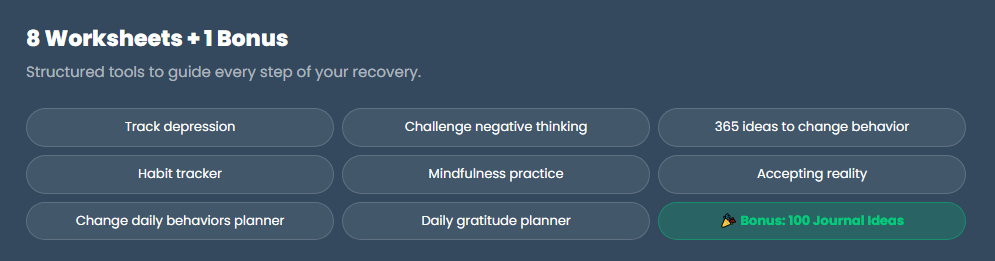
This is where Rise from depression Review searches get interesting. USA buyers are often trying to separate real structure from recycled lifestyle chatter. And based on the product page, Rise From Depression seems to be trying to offer a full system, not just one random habit. It includes lessons on negative thinking, physical self, mindfulness, gratitude, radical acceptance, assertiveness, habit tracking, and daily behavior planning. That’s more layered. More organized. Less “drink a green smoothie and ascend.”
That doesn’t mean it will work for every buyer. Let’s not go crazy. It means the product is at least trying to be a system, not a slogan.
And systems, even imperfect ones, usually beat slogans.
5. The Internet Extreme: “It’s Either a Miracle or a Scam”
The internet hates normal-sized opinions.
Everything now has to be “best ever” or “fraud.” Genius or trash. Revolutionary or fake. That style of thinking is exhausting, and it ruins a lot of product discussions, especially around mental health. So when people search Rise from depression Review, they often land in one of two weird places: a glowing article that sounds like it was written by a man trapped inside a checkout button, or a bitter rant that dismisses the product without reading what it even says.
Both are lazy.
The smarter question is not “Is this a miracle?” because that’s childish. The smarter question is whether the product looks transparent, realistic, and well-defined.
Based on the sales page, Rise From Depression does give specific details. It names the creator. It lists the methods. It explains what’s included. It gives the price. It says the product is self-guided. It says it is not a substitute for therapy in severe cases. Those are healthier signs than the usual sketchy internet magic show.
So is it “100% legit”? That phrase is too loud for me. Too shiny. Too affiliate-ish. But does it look like a real digital course with a real framework and a clear audience? Yes, it does. That’s the more useful answer.
And useful answers rarely sound dramatic enough for the internet. Tough luck.
6. The Lazy Buyer Fantasy: “Self-Guided Means Effort-Free”
This is the silent mistake a lot of people make.
They see “online course” and imagine ease. They imagine maybe a few videos, a worksheet or two, some emotional relief, nice little progress. But self-guided also means something else. It means you are the one who has to show up. Not a therapist calling you. Not a coach texting you. You.
That can be freeing. It can also be frustrating. Some days you won’t want to open a lesson. Some days you will look at a worksheet and feel actual irritation, like deep irrational annoyance. That’s normal too.
A grounded Rise from depression Review should not hide that. The product may be well put together, but a well-made hammer still won’t build the shelf by itself. Bad metaphor maybe. No, actually, it works. Sort of.
The sales page is pretty direct here. It says the course is for people ready to learn and do the work, and not for people looking for a passive fix. That honesty helps. A lot. Because many complaints around self-help products are really complaints about effort. People buy hope, then get offended when hope comes with homework.
Sad. Also common.
7. The Impatient Lie: “If It Doesn’t Fix You Fast, It Doesn’t Work”
This one feels very 2026, doesn’t it?
People want same-day shipping for emotions now. Same-hour clarity. Same-week reinvention. We live in a scroll-fast, click-fast, react-fast culture, especially in the USA, and that speed can poison expectations. If a course does not turn your whole inner world around immediately, some buyers start acting like they were conned by gravity itself.
But depression work is usually slower than people want. Less cinematic. Less obvious. Sometimes the first real win is not joy. It’s just slightly less heaviness. Slightly more clarity. A little more control over the next hour. Which sounds small, and maybe it is small, but small things matter when your days have been sinking.
So this Rise from depression Review has to say the uncool thing: if you expect instant transformation, you may be disappointed. If you expect a structured tool that helps you understand the cycle and gives you practical steps, that sounds more in line with what is actually being sold.
And honestly, that distinction is everything.
My Overall Take on Rise from depression Review Searches in the USA
If someone in the USA is searching Rise from depression Review, they are usually not just shopping. They are checking for danger. Checking for hope too, yes, but carefully. They want to know if this is fake, overhyped, too basic, too expensive, too passive, too flimsy. All the normal questions.
From the sales page, the product looks like a real self-guided course built around recognized methods. It does not present itself as emergency care. It does not say everyone will get the same results. It does not hide the effort involved. That doesn’t make it perfect. It makes it more believable.
And believable matters.
What may bother some buyers is exactly what makes it seem honest: it asks for work. It does not sell a fantasy of effortless change. It says there are videos, worksheets, tools, and structure. That’s good if you’re ready. Less good if you’re hoping a payment page alone will fix your life. Which, to be fair, would be amazing. But no.
So, if I strip away all the noisy phrases like “highly recommended” and “no scam” and “100% legit,” this is where I land: it appears to be a serious self-guided option for people who want structure and who understand that self-guided still means effort. It seems more realistic than many shiny products online. Not magical. Not useless. In that middle zone where a lot of real help tends to live.
And middle zones rarely get enough love.
Filter out the nonsense.
Please. Seriously.
Ignore the people who reduce depression to attitude. Ignore the fake toughness crowd. Ignore the wellness parrots. Ignore the miracle language. Ignore the sloppy cynics who call every digital product a scam just because it exists online. Most bad advice sounds bold because boldness is cheap. That’s why it spreads.
What usually helps is less flashy. More method. More repetition. More patience than most people want to hear about. More honesty, too. That’s what makes a decent Rise from depression Review worth reading in the first place. Not hype. Not glitter. Just enough truth to help you make a sane decision.
And sane decisions, even little ones, have a way of adding up.
FAQs
1. Is Rise From Depression a scam?
From the sales page details, it does not look like a scam. It looks like a real self-guided course with a named creator, clear structure, price, and limitations. That said, “real” does not mean “right for every single person.” Important difference.
2. Who is this course best for in the USA?
It seems best for USA buyers who want flexible, private, lower-cost guidance and are willing to actually use the lessons and worksheets. If someone wants crisis support or one-on-one clinical care, this is probably not enough on its own.
3. What is included in the product?
According to the sales page, you get 13 video lessons, 8 worksheets, bonus journal ideas, and lifetime access. The content covers CBT, mindfulness, behavioral activation, self-compassion, gratitude, and related tools.
4. Why do some Rise from depression Review articles sound overly dramatic?
Because many of them are trying to sell, not just explain. So you get phrases like “highly recommended” and “100% legit” thrown around like confetti. Some may be sincere, sure, but some are clearly trying too hard. Best to look at the actual product details instead.
5. Is this a replacement for therapy?
No, and the sales page appears to say that pretty directly. It is presented as a self-guided support tool, not as emergency treatment or a substitute for licensed therapy in severe cases. That honesty is actually one of its better signs.
7 Ugly Truths in Rise from depression Reviews 2026 USA: Read This Before You Buy